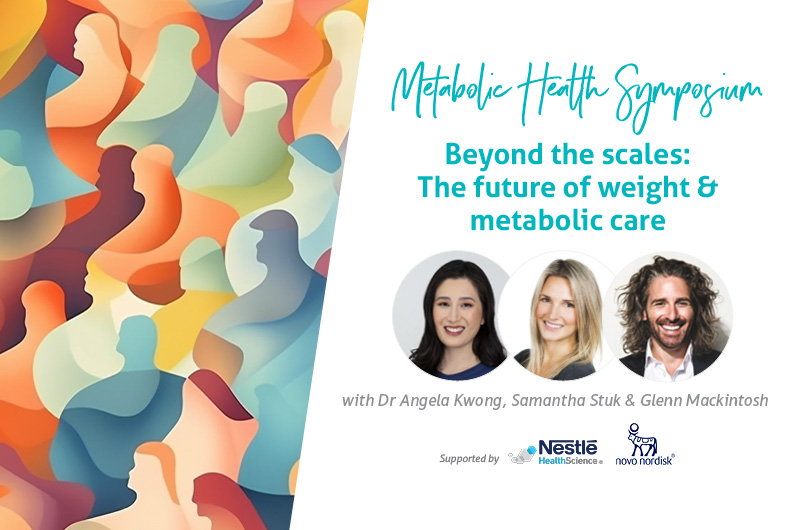
Metabolic Health Symposium: Beyond the scales: The future of weight & metabolic care
Australian/NZ dietitians: The live symposium was held on 11 February 2026. CPD hours are applicable for Australia and New Zealand dietitians.
US dietitians: The live symposium was held on 10 February 2026. CPEUs from CDR are NOT available for this symposium.
Check your local country requirements to see if you can claim for continuing education.
About the symposium:
Tune in to our 2026 Metabolic Health Symposium where we explore the new metabolic landscape, including emerging therapies, practical strategies to support nutrition adequacy on a reduced appetite, the role of protein in preserving muscle and function, and how dietitians can support and empower patients to navigate change across the care journey.
Agenda:

The new metabolic landscape
Metabolic health care is evolving fast. New pharmacotherapies, changing bariatric techniques, expanding digital care models, and a growing recognition of obesity as a chronic disease are reshaping the frameworks health professionals were originally trained in. In this session, GP Dr Angela Kwong explores the shift from traditional step-wise models to more blended, individualised approaches. She’ll reflect on where lifestyle, pharmacotherapy, surgery, VLCDs and meal replacements now fit, the importance of multidisciplinary collaboration, and why nutrition and lived experience matter more than ever in supporting safe, sustainable, and compassionate care.
Dr Angela Kwong is a General Practitioner from Sydney and the NSW State Lead for the Specific Interests Group in Obesity Management with the RACGP. She is the Founder of Enlighten Me, an online multidisciplinary weight loss program integrating medical care, nutrition education and exercise. Passionate about reducing weight stigma and increasing access to evidence-based weight management options, she organised The Australian Weight Loss Summit, bringing together health professionals and the public for education and open discussion.

Ensuring nutrition adequacy on a reduced appetite
GLP-1 therapies can deliver significant metabolic benefits, but they can also reduce appetite and overall food intake, creating potential risks for nutritional adequacy. This session with APD Samantha Stuk explores emerging evidence on diet quality and nutrient intake during GLP-1 therapy, alongside relevant learnings from bariatric care and other reduced-intake approaches. Using a case study, Samantha will step through how to identify clients at greatest risk, how to screen and monitor nutritional adequacy across treatment stages, and practical strategies to support nutrient density, hydration, and symptom management during dose escalation and beyond.
The role of protein in body composition & obesity-related sarcopenia
Lean mass matters, especially during GLP-1 therapy where appetite changes can make it harder to meet protein needs. When protein intake drops, the risk of sarcopenic obesity increases, with muscle mass and function declining while fat mass remains high. In this session APD Samantha Stuk explores why protein intake often falls short in real-world care, and what dietitians can do to protect strength, function and long-term outcomes, particularly for older adults. You’ll learn evidence-informed protein and exercise targets, key risk groups and red flags, plus practical strategies to support body composition and long-term sustainability.
Samantha Stuk is an Accredited Practising Dietitian with 15 years of clinical experience across the public and private health sectors. She has a special interest in metabolic health and diabetes, and has enjoyed lecturing on these topics for Dietitians Australia and the Australasian Diabetes Congress. In 2015, she established “The Nutrition Code” private practice. Alongside this, she is a Senior Diabetes Dietitian at The Royal Melbourne Hospital, and a research dietitian with the Austin Hospital’s “Centre for Research and Education in Diabetes and Obesity” (CREDO).

Psychological considerations in modern metabolic care
New pharmacotherapies bring many potential benefits, as well as important considerations for patient support. In this session, psychologist Glenn Mackintosh explores key psychological factors to help maximise treatment outcomes while minimising risks for people taking, or considering, GLP-1 therapies. Weight stigma and body image concerns will be discussed, alongside relevant psychopathology, the role of interdisciplinary care, and practical ways dietitians can strengthen support for clients, while delivering evidence-based, person-centred care.
Glenn Mackintosh is a psychologist who is passionate about eating, physical activity, weight, body image, and health in general. He is the Clinical Director of the Weight Management Psychology clinic, the Creator of the Transformation Support Community online program, and the author of the bestselling book, ‘Thinsanity: 7 Steps to Transform Your Mindset & Say Goodbye to Dieting Forever’. Glenn enjoys supporting his clients and online program members, supervising the clinical members of his team, and training a variety of health professionals to apply psychological principles to better support their clients and patients.
Click here to explore options for psycho-dietetic training courses offered by Glenn.
Symposium supported by


The content, products and/or services referred to in this symposium are intended for Health Care Professionals only and are not, and are not intended to be, medical advice, which should be tailored to your individual circumstances. The content is for your information only, and we advise that you exercise your own judgement before deciding to use the information provided. Professional medical advice should be obtained before taking action. The reference to particular products and/or services in this symposium does not constitute any form of endorsement. Please see here for terms and conditions.
| Continuing Education (USA) | |
|---|---|
| Duration | 3.5 hours |
| CPEUs Awarded | N/A |
| Performance Indicators | N/A |